
Montgomery County Deed Records and What They Show
The Clerk of Superior Court, not the Tax Assessor, records Montgomery County deed records. Each deed ties a named party to a legal description on a set recording date. Related instruments cover financing, releases, estates, plats, liens, and tax sales. Read every document on its own terms.
| Deed Type | What It Does | Common Use |
|---|---|---|
| Warranty deed | Conveys the interest described with stated title covenants | Ordinary sale or transfer |
| Quitclaim deed | Conveys whatever interest the grantor may have without promising title | Correcting or clearing a possible interest |
| Security deed | Secures a Georgia real-estate debt | Tracing a loan, assignment, or cancellation |
| Executor or administrator deed | Conveys through an authorized estate representative | Following a probate-related transfer |
| Tax deed | Records a conveyance arising from a tax-sale process | Researching a delinquent-tax chain and later redemption |
The label matters less than the words inside. Operative language, exceptions, referenced plats, and signatures tell you what a deed really does, and a tax deed alone cannot settle every redemption or title question. A security deed is not a sale deed.
The Clerk Holds the Recorded Instrument
The Montgomery County Clerk of Superior Court maintains deeds, liens, plats, UCC records, court files, and transfer and intangible tax records. The office sits at 400 South Railroad Avenue, Mount Vernon, with mail to P.O. Box 311. The telephone number is 912-583-4401. Ask this office for certified copies. It also holds the old deed books and answers recording questions. Plat references go here too. The assessor's ownership line makes a useful cross-check. Neither substitutes for the recorded instrument.
Note: Ask the Clerk to quote the current copy and certification charge and confirm the online cutoff, because the county publishes no fee schedule.
Search the GSCCCA Real Estate Index
The Georgia Superior Court Clerks' Cooperative Authority search system offers statewide routes into real estate, PT-61, lien, and plat records. Its published description confirms deed index data for every Georgia county since at least January 1, 1999. Older material keeps being added. Montgomery County's earlier online start date is not published.
| Search field | Use in a deed search | Important limit |
|---|---|---|
| Name and party type | Test a grantor or grantee, including entity and estate names | Initials and spelling variants can split results |
| County and date range | Confine results to Montgomery and a plausible period | An overly narrow range may hide the link |
| Instrument type | Separate deeds, security instruments, releases, and other filings | Index labels do not replace reading the image |
| Book and page | Retrieve a known citation from a deed, plat, or notice | Preserve every digit and volume designation |
| Property fields | Test subdivision, unit, block, lot, or geography when enabled | Participation and field use vary by county |
The official explanation of the Real Estate Index lays out the search model and its statewide coverage. A live Montgomery result still needs checking.
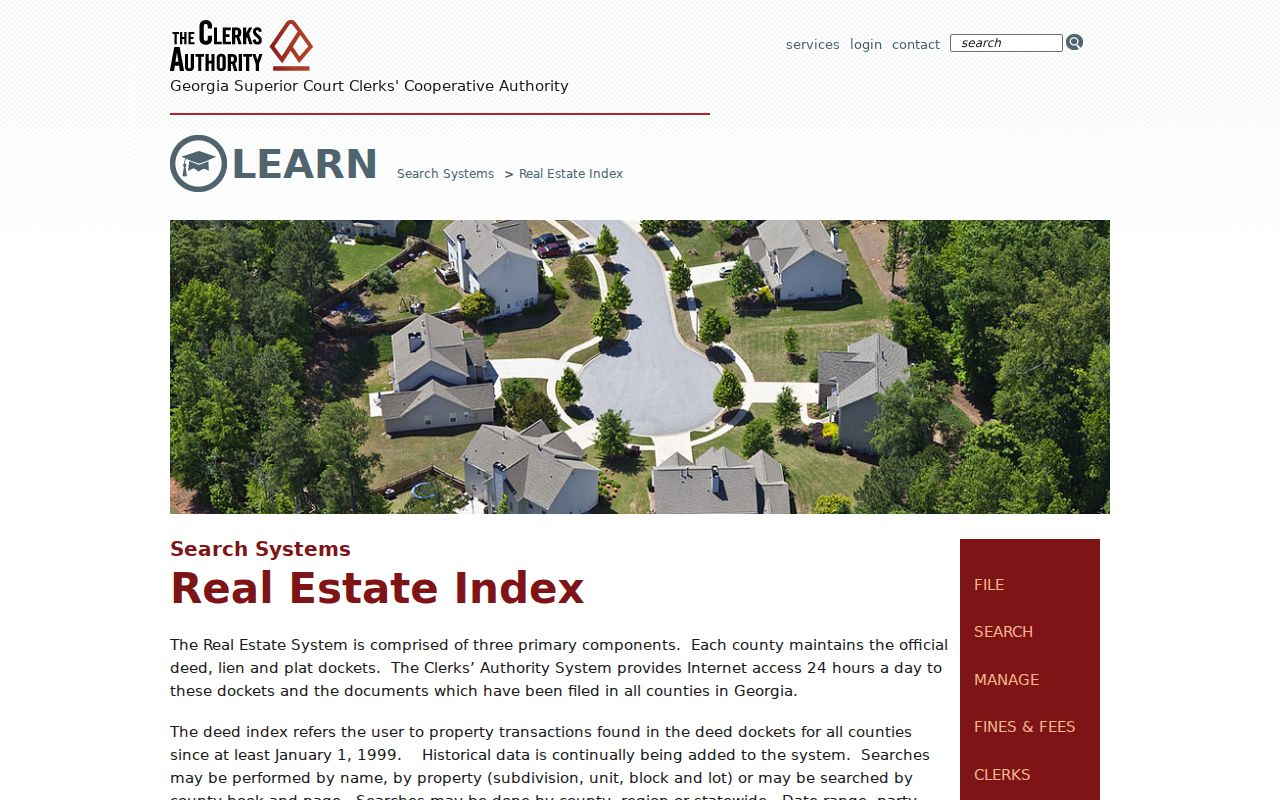
Party names and book/page references bridge the gap between an index row and the deed image. They lead next to the Clerk's certified copy.
The Montgomery County Grantor-Grantee Index
A chain search works backward from the newest conveyance you can support. The latest grantee becomes a grantor candidate. The land must match, not just the surname.
- Begin with the current qPublic owner lead, a known deed, or a book/page citation.
- Search that name as grantee and compare recording date, instrument type, and property description.
- Read the likely instrument and transcribe its prior deed, legal description, exceptions, and plat references.
- Search the prior grantor as a grantee in an earlier period and repeat the comparison.
- When online coverage stops, continue through the Clerk's books, microfilm, and archive finding aids.
- Grantor
- The party conveying or granting the described interest.
- Grantee
- The party receiving the interest described in the instrument.
- Chain of title
- The linked sequence of conveyances affecting the same land, verified document by document.
- Book/page
- The recorded volume and page citation used to retrieve an instrument or plat.
Read Party, Date, and Description Together
A good Montgomery deed-index row can carry party names, roles, county, instrument type, recording date, book and page, location or legal description, and image availability. Save every field. A same-name hit proves little. Initials, married names, estates, trusts, and businesses repeat constantly in these records. Recording and instrument dates can differ. Compare the legal description against acreage, Georgia Militia District, roads, creeks, subdivision lot and block, adjoining owners, and any “less and except” clause. Those clues outlast address changes.
Use PT-61 as a Sales Cross-Reference
The PT-61 Index holds transfer-tax and sales information tied to conveyance recording. It can help locate a transaction. It can also explain consideration data. But it is a companion, not the deed. Match its transaction reference against the deed's parties, recording citation, and legal description before attaching a price to a parcel.
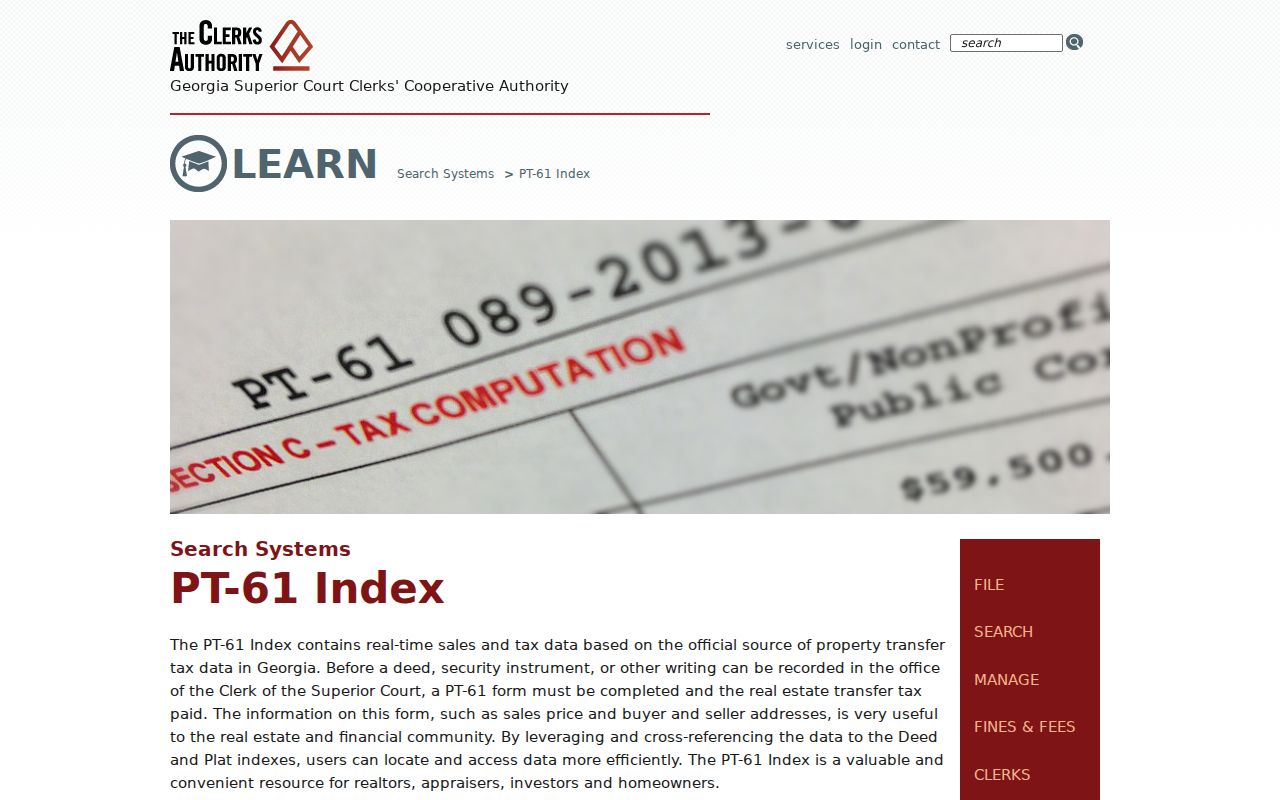
A stated consideration on a PT-61 can differ from current assessor value, and it may not reflect an arm's-length market sale.
Follow Security Deeds, Assignments, and Releases
Conveyance chains and financing chains answer different questions. Search direct and reverse lien indexes for security deeds, assignments, modifications, cancellations, and releases, since a release for one lien does not free another. Court judgments, federal tax liens, UCC records, probate files, and pending litigation may need separate searches. The Clerk handles the local court and recording functions for Montgomery County. Federal cases route through the Southern District of Georgia. PACER hosts those dockets. No single index delivers a complete encumbrance report.
Let Plat Book and Page Identify the Lot
Montgomery County legal notices offer unusually concrete research seeds. A Whispering Pines description cites Lot 1, Block 1-A and Plat Book 2, page 14. Uvalda examples point to Denmark Subdivision Lot 33 at Deed Book 46, page 464, and McNatt Division Lots 3 through 5, Block 1 at Deed Book 129, page 216. Pull the cited plat and deed. Then check later replats, splits, rights-of-way, and exceptions. A newspaper notice is dated discovery evidence, not a certified current deed.
Continue Before the 1999 Online Baseline
Montgomery County dates to 1793, and its own official history traces tax records to 1795. Deeds run older still. The Georgia Archives finding aid lists unrestricted Superior Court deed records covering 1794 through 1872. Later deed books and microfilm may still sit with the Clerk rather than the archives. So the paper trail often splits between the two.
Boundaries shifted too. Parts of old Montgomery land became Wheeler, Tattnall, Toombs, Treutlen, Dodge, and Emanuel counties. When you chase an early tract, first confirm which county held the land on the deed date. Keep every historical district reference intact.
Note: No courthouse fire or imaging-cutover date appears in the county's own records, so a missing online image does not mean the deed book was lost.
Use FANS for Future Filing Notices
FANS is Georgia's free Filing Activity Notification System. Sign up with an email address or a text-capable phone. You then create names to watch. The system flags later matching filings against Montgomery County deed records. Coverage runs forward one year from signup. It relies entirely on clerk indexing and transmission. The official FANS page spells out the alert route available to Montgomery property researchers.
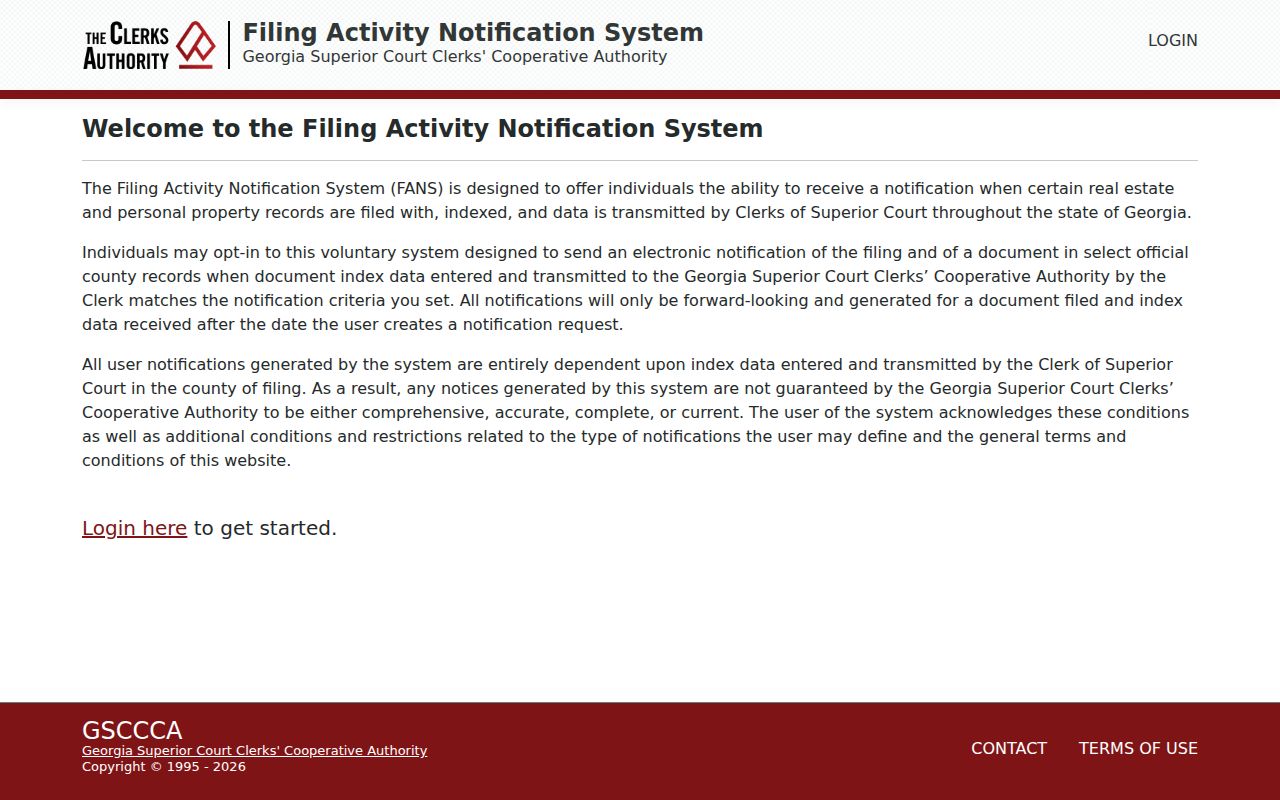
FANS has firm limits. It does not search historical deeds, stop a recording, guarantee notification, or prove fraud. Take any alert straight to the Clerk for verification.
Getting a Copy of a Montgomery County Deed
Once you identify the instrument, write down the county. Also record the book and page, parties, instrument type, and recording date. Check GSCCCA account options for current online image terms. Published rates list regular access at $14.95 per user each month effective July 1, 2025. Premium runs $29.95, single-use activation at $5, and printing at $0.50 per page. Confirm current charges before you buy. The account information page displays the online access route for deed records.
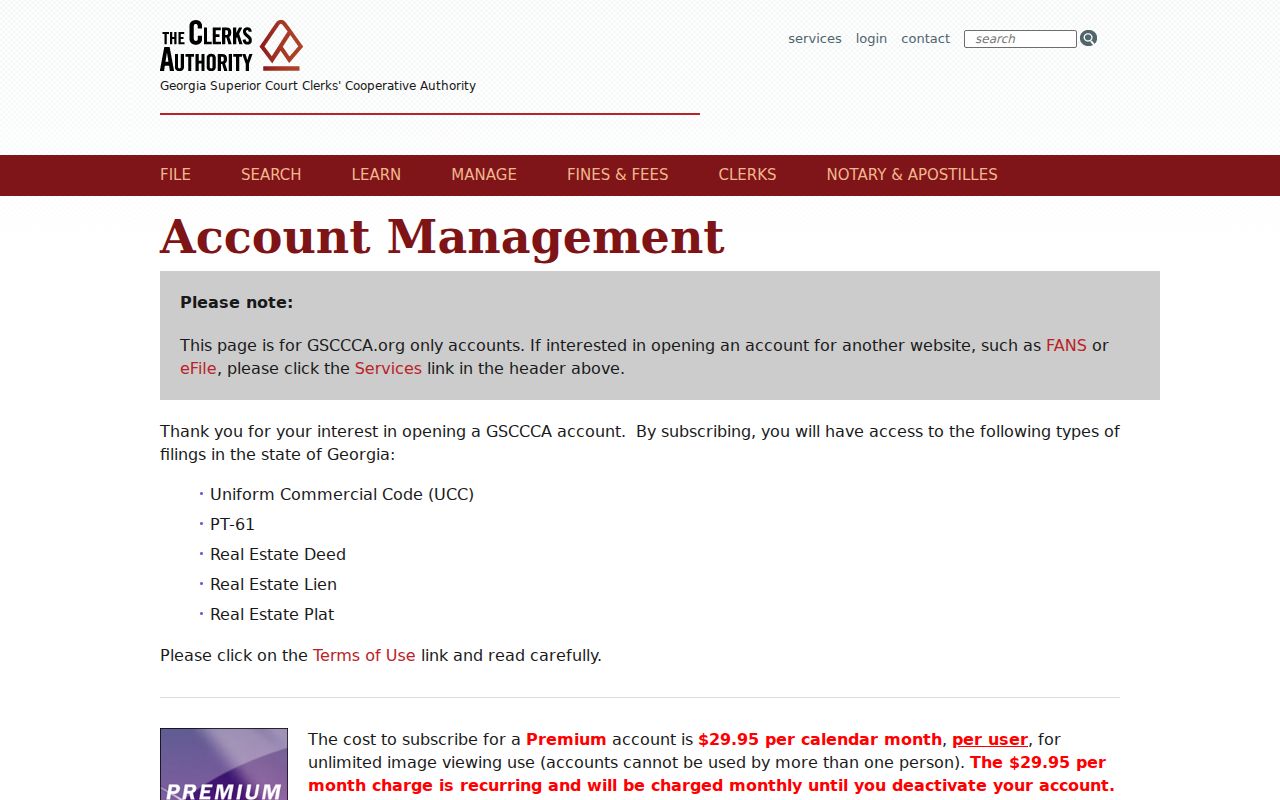
For a certified copy or an unavailable image, hand the citation to the Clerk. Ask about delivery, certification, and payment. A focused Georgia Open Records Act request should name the property or parties. It should also give the document type and a date range.
For mail or counter service, ask whether the Clerk needs a self-addressed envelope. Also ask about advance payment or a written certification request. No book and page? Supply both party names, the likely year, instrument type, APN, and legal-description clues instead. Keep the plain index printout separate from the certified image. The two serve different evidentiary purposes.
A deed search should not stop at the first instrument. After pulling the conveyance, run the grantee's name forward through the deed records. Look for corrective deeds, security deeds, easements, assignments, releases, and later sales. That forward check keeps an older but convincing-looking deed from being mistaken for the last recorded event.
Track instrument date, recording date, and certification date in separate fields. The distinction matters. It keeps the chain easy to audit. It also stops a delayed recording from landing in the wrong sequence.
Recorded, not guaranteed. Recording gives public notice of an instrument; it does not guarantee valid title, resolve an unrecorded interest, or replace a lawyer's title examination.